The Short Version
Tone and probe kits look interchangeable on paper. They are not. The cheap analog kits work fine in a quiet basement and fail badly in a commercial wiring closet with three rows of fluorescent lights and a 480V feeder running overhead. This guide covers what to buy and how to actually use it.
What Makes a Good Tone and Probe Kit
Signal Type: Analog vs Digital
Analog generators push a continuous audio tone (usually around 1 kHz) onto the cable. Cheap, simple, and the standard for decades. The problem is that 60 Hz hum from electrical equipment and fluorescent lights bleeds into the audio range and the probe picks it up indiscriminately. Digital generators push a coded signal that the matching digital probe filters from background noise. The signal is either present or absent — no false positives from a nearby ballast.
Probe Sensitivity Adjustment
Adjustable sensitivity lets you isolate a single cable in a bundle. Crank the sensitivity high to find a tone in a wall. Drop it low to identify which specific cable in a 50-bundle is the one you toned. Without sensitivity adjustment, you get an all-or-nothing response that is useless in dense environments.
Volume Control on Probe
Standard on professional kits, often missing on hobby-grade ones. You will be working in environments where shouting volume is unwelcome (occupied offices, hospital corridors). Adjustable volume keeps you compatible with the environment.
Live Network Compatibility
Pro-grade tone generators are designed to be applied to active cables without damaging connected equipment. This is essential for IT troubleshooting work where you cannot pull patch cords just to identify a drop. Hobby kits often lack the necessary protection — verify before toning live cable.
Multiple Tone Frequencies / Cadences
Better generators offer two or three tone cadences so you can run multiple tones simultaneously in adjacent areas without confusion. This is a feature you do not appreciate until the day you need it on a multi-tech job.
Top Picks for Tone and Probe Work
1. Digital Tone & Probe Kit — Best Overall
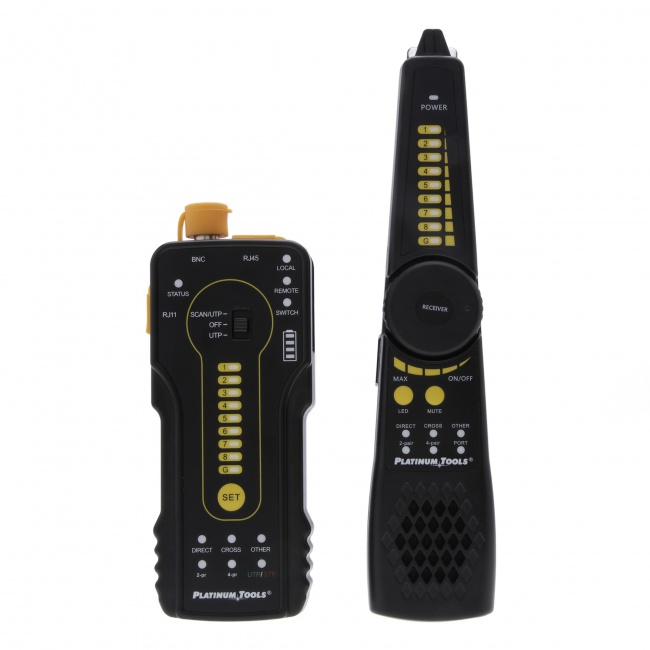
The Digital Tone & Probe Kit is the right call for commercial low-voltage work. The digital signal is filtered from background noise, you can trace through dense bundles without false positives, and the probe has adjustable sensitivity and volume. It is also safe on live networks, which means you can identify drops without disrupting active connections.
2. Analog Tone Kit — Best for Residential
For residential work in quiet electrical environments, a simpler analog kit handles 90% of cable identification at a lower cost. The tradeoffs (false positives in noisy environments, less effective on live cables) rarely show up in residential work because there is not much EMI to fight. If your scope is purely residential, an analog kit is acceptable.
3. VDV MapMaster — Best Combined Tester + ID
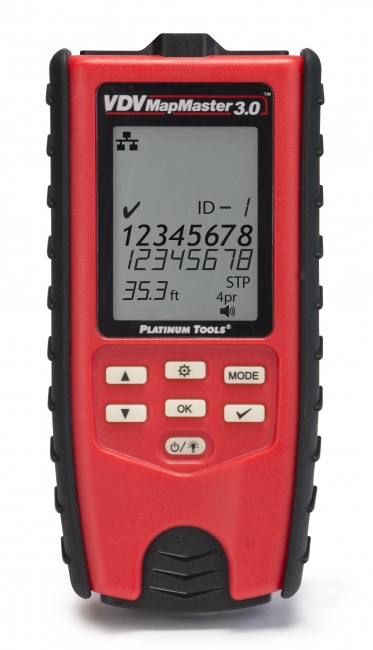
The VDV MapMaster 3.0 combines a wiremap tester with cable identification using numbered remotes. Drop a numbered remote at each jack, plug the master in at the wiring closet, and the unit tells you which port is connected to which remote. The tester ships with one remote; the numbered ID remote sets are a separate purchase and not one we stock, so price that in before you plan a floor in a single pass. For installers who primarily need to identify already-terminated drops (rather than tracing unterminated cable in a bundle), this is faster than tone-and-probe.
Tone and Probe Comparison
| Kit | Signal Type | Best For | Pros | Cons |
|---|---|---|---|---|
| Digital Tone & Probe Kit | Digital | Commercial / noisy environments | Rejects EMI, live-safe, dense-bundle tracing | Higher cost than analog |
| Generic analog tone kit | Analog | Residential / quiet environments | Low cost, simple | False positives in EMI environments |
| VDV MapMaster 3.0 | Wiremap + ID remotes | Identifying terminated drops | Tests + identifies in one tool with numbered remotes | Not for tracing unterminated cable in walls |
| Combination wiremap + tone | Hybrid | General-purpose IT | One tool for ID and basic test | Neither function is best-in-class |
| Hobby-grade analog | Analog | One-off DIY use | Cheap | Limited range, weak probe, not live-safe |
How to Use a Tone and Probe Kit (and Common Mistakes)
The Basic Workflow
Connect the tone generator to one end of the cable you want to identify (RJ45 jack, alligator clip onto bare wire, or coax adapter for cable TV work). Take the probe to the other end. Sweep slowly across the cables in question. The one carrying the tone is the loudest. Confirm by adjusting probe sensitivity down until only the target cable triggers.
Mistake: Wrong End Connection
Tone generators are bidirectional in twisted-pair cable but the connection point matters. If you clip onto only one conductor of a pair, the signal is weaker than if you tone both conductors of a pair (or all 8 conductors). Use the right adapter for your situation — RJ45 plug connection for terminated cable, alligator clips for bare wire.
Mistake: Sensitivity Too High in Bundles
A common rookie mistake is leaving probe sensitivity at max while sweeping a 50-cable bundle. The strong tone bleeds into nearby cables and the probe triggers on multiple cables. Drop the sensitivity until only the actual toned cable triggers, then verify by isolating that cable from the bundle.
Mistake: Toning Without First Visually Inspecting
Half of cable identification is just looking. Before reaching for the toner, see if you can follow the cable visually from one end to the other. Often the answer is right there. Toning is for cables that disappear into walls, ceilings, or dense bundles — not for cables you could trace by eye in 30 seconds.
Toning Special Cases
Coax (CATV / Satellite)
Most digital toners include an F-connector adapter for toning RG6 and RG59. The signal travels just as well on coax shielding as it does on twisted pair, often better. Cable TV techs sweep panels of unlabeled coax this way every day.
Speaker and Audio Wire
Bare-conductor audio wire and security wire tone fine with alligator-clip leads. The probe is identical — only the connection at the source changes. This is why a single quality kit replaces three or four trade-specific tools.
Active PoE Cables
Toning a live PoE drop with an analog generator is asking for damage. Modern digital tone-and-probe kits are designed to handle the 48V on the line — confirm yours is rated for active networks before injecting any signal into a switch port.
Fiber
You can't tone fiber. The optical equivalent is a visual fault locator, which injects a red laser visible through the cable buffer. Different tool, same workflow.
Pro Tips From the Field
Always Tone the Whole Pair (Or All Eight)
Single-conductor toning works, but it's quieter and more error-prone. RJ45 plug adapters that connect all eight conductors at once produce a louder, cleaner tone that finds the cable on the first sweep instead of the third.
Don't Tone Live Networks With an Analog Generator
Connecting an analog tone generator to a port on a live switch can damage the switch port and confuse the tone signal. Either disconnect the cable from the switch first or use a digital toner that's rated for live-network injection.
Color-Code the Probe Tip With Tape
Probes look identical to other tools at a job site. A wrap of red electrical tape on the probe handle saves you from grabbing the wrong tool from the bag (or from a coworker's bag) repeatedly through the day.
Carry Spare Batteries
Both halves of a tone-and-probe kit live on 9V batteries. They die at the worst time. Keep a spare 9V in the kit pouch and replace both batteries on a yearly basis — old batteries leak and corrode the contacts inside the housings.
Match the Kit to the Job
Commercial IT / MAC Work
Wiring closets in occupied buildings. Live networks, noisy environments, dense bundles.
Pick the Digital Tone & Probe Kit. The digital signal is the only thing that works reliably in this environment.
Residential Smart Home
Tracing low-voltage runs in attics, crawlspaces, and behind walls. Quiet electrical environment.
Either a basic analog kit or the Digital Tone & Probe Kit works. Digital is overkill but future-proof.
Network Admin Identifying Drops
Mostly identifying which patch panel port goes to which wall jack on already-terminated drops.
Pick the VDV MapMaster. Tests and identifies in one motion using numbered remotes.
Low-Voltage Generalist
Mix of voice, data, security camera, and audio runs across job types.
Pick the Digital Tone & Probe Kit. Versatile across all low-voltage cable types.
Related Reading
Frequently Asked Questions
What is the difference between an analog and digital tone generator?
An analog tone generator pushes a continuous audio-frequency tone onto the cable. A digital tone generator pushes a coded signal that the matching probe filters from background noise. Digital systems like the Digital Tone & Probe Kit are far more accurate in noisy environments — fluorescent lights and electrical equipment all create interference that confuses an analog probe.
Can I tone an active live network cable?
Most professional tone generators can be applied to an active cable without damaging the connected equipment. The Digital Tone & Probe Kit is designed to coexist with PoE and live data. Hobby-grade analog toners may not be safe on live circuits — confirm in the manual.
How do I trace a cable in a bundle of similar cables?
Apply the tone generator to one end of the cable you want to identify. At the other end, sweep the probe slowly across the bundle. The cable carrying the tone produces the loudest signal. Drop the probe sensitivity until only the closest cable triggers. In environments with electrical interference, a digital tone system rejects the interference and only triggers on the coded signal.
Do I need a separate cable tester if I have a tone and probe kit?
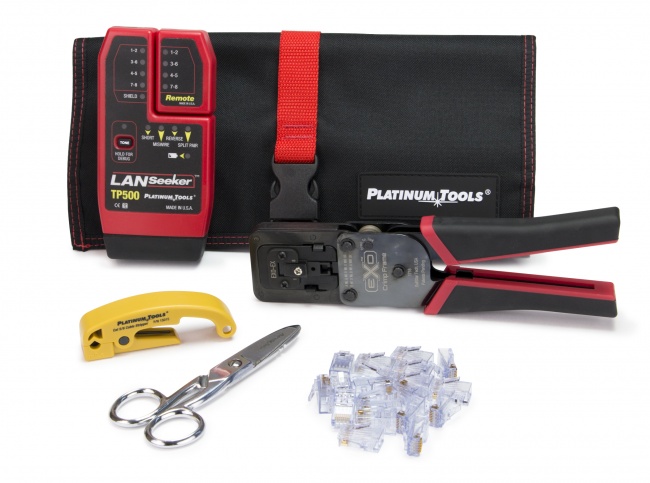
Yes. A tone and probe kit identifies cables but does not test them. To verify a termination is wired correctly you need a wiremap tester like the LanSeeker. Some advanced testers like the VDV MapMaster combine wiremap testing with cable identification using numbered remotes.
What is the best tone and probe kit for noisy environments?
The Digital Tone & Probe Kit is the right tool for noisy commercial environments. Digital signal coding rejects 60 Hz hum, lets you trace through bundles without false positives, and works on active live networks.
Get the Right Tone and Probe Kit
Browse the full lineup of cable identification and testing tools. Trace clean, work fast.