Quick Answer
The cable testing market breaks down into three clear tiers, each designed for a different level of verification. The difference isn't just price - it's what questions the tool can answer about your cable. A wire map tester tells you if the pins are connected. A qualification tester tells you if the cable is installed correctly. A certifier tells you if it will actually perform at rated speed.
We'll break down each tier, explain what the testers we stock actually measure, note where brands like Fluke Networks, Klein Tools, and Ideal Networks fit in the wider market, and give you a straight recommendation based on your role.
Tier 1: Wire Map Testers ($30-$100)
What they do
Wire map testers are the most basic and most essential cable testing tools. They send a signal through each of the 8 conductors in an RJ45 connection and verify three things: every pin is connected (no opens), no pins are touching each other (no shorts), and the pins are in the correct order (no miswires, reversals, or split pairs).
Some models in this range add a tone generator for cable tracing, which lets you identify a specific cable in a bundled run by clipping a toner to one end and scanning with a probe at the other.
What they tell you
- Pin-by-pin continuity - is each conductor connected end to end?
- Wiring faults - opens, shorts, miswires, reversals, and split pairs
- Cable identification - which cable is which (tone generator models)
What they miss
- Cable length - no way to measure distance or find where a fault occurs
- Signal quality - no crosstalk, return loss, or attenuation measurements
- Speed capability - can't tell you if a cable will support 1 Gbps or 10 Gbps
- PoE status - no detection of Power over Ethernet
Best for
DIY homelab builders, homeowners pulling a few drops, anyone who needs quick pass/fail verification after crimping. If you own a crimping tool, you should own at least a wire map tester.
Our Pick: Budget Wire Map
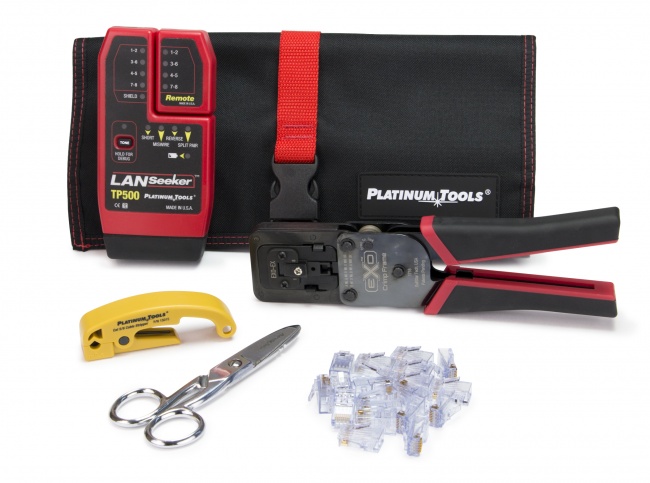
One-button pass/fail testing, pocket-sized, built-in tone generator. The LanSeeker is the fastest way to verify a termination. No menus, no setup - press the button and get a result.
Also Consider: Tone & Trace
The LanSeeker's built-in toner handles occasional tracing. If identifying cables in bundled runs is the main job rather than testing terminations, a dedicated kit costs more but gives you adjustable volume and multiple tone patterns to cut through electrical noise.
Tier 2: Qualification Testers ($100-$450)
What they do
Qualification testers do everything a wire map tester does, then go significantly further. Depending on the model, a tester in this tier will measure cable length using time-domain reflectometry (TDR), detect and measure PoE, identify the cable's speed capability, or generate documentation reports. Network-aware features like DHCP verification and switch port identification show up on some models in the wider market. Which of those you get is a per-model question, so buy off the spec sheet rather than the tier.
This is the tier where cable testing becomes cable qualification - you're not just checking if the wires are connected, you're verifying the installation meets a useful standard.
What they tell you
- Everything Tier 1 covers - full wire map and fault detection
- Cable length - total length and distance to any fault
- PoE detection - identifies PoE standard (af/at/bt), voltage, and active pairs
- Link speed verification - what speed the cable can negotiate
- Cable identification - test and label multiple drops with numbered remotes
- Report generation - PDF exports for client documentation
What they miss
- Full TIA/EIA compliance - no NEXT, return loss, or insertion loss measurements
- Certification-grade accuracy - results are informational, not standards-traceable
- Alien crosstalk - can't measure interference between adjacent cables
Best for
Anyone who has to prove a run is good rather than just believe it: measure its length, find where a fault sits, keep a record for the client. That covers most professional installers and most IT departments doing their own cabling, and for that work this is the sweet spot. We do not sell a tester at any tier that talks to the network on the far end of the cable, so DHCP, DNS, and link negotiation stay a switch-side problem.
Our Pick: Mid-Range Qualifier
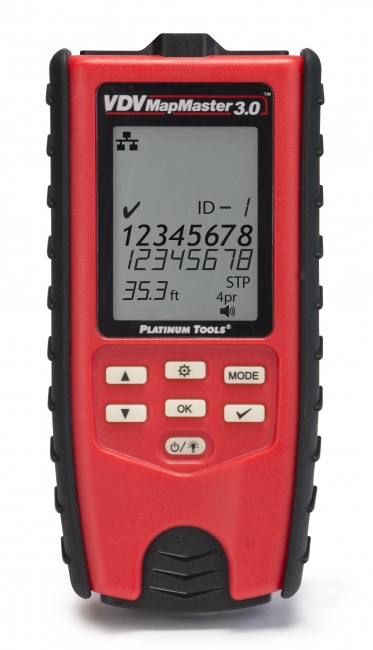
Maps all 8 pins, measures length with distance-to-fault, verifies that a shielded run is bonded end to end, and identifies drops by number with ID remotes. The best value in the qualification tier for structured cabling installs.
Tier 3: Speed Certifiers
What they do
Wire map and length testing catch about 80% of cable problems. The other 20% are subtle issues with bandwidth, signal integrity, or marginal terminations that only show up when traffic actually moves through the cable, and closing that gap is the whole reason this tier exists.
Delay skew is the example worth knowing. Skew is the time difference between the four pairs in a cable, and a skew failure means one pair carries the signal noticeably faster or slower than the others, usually because of a bad termination, a damaged cable, or mixing different cable types in the same run. Excessive skew prevents the receiving NIC from reassembling the parallel data streams, which kills throughput — and a wire map test will call the same cable a pass.
Certification-level testers measure the actual electrical performance of a cable installation against industry standards. Instead of just checking if the wires are connected and roughly how long they are, certifiers measure the parameters that determine whether a cable can reliably carry data at its rated speed: near-end crosstalk (NEXT), return loss, insertion loss, propagation delay, and in some cases alien crosstalk between adjacent cables.
A speed certifier takes a different approach. Instead of measuring individual electrical parameters, it pushes traffic through the cable and counts the bit errors at the target data rate. That answers the gigabit question directly, but it is not a standards-compliant certification result, and a contract that says "certify" will not accept it.
What they tell you
- Everything Tier 1 and 2 cover - wire map, length, PoE, identification
- Actual throughput - real data speed measurement, not just theoretical capability
- Performance margin - how much headroom your cable has above minimum standards
- Compliance verification - pass/fail against TIA/EIA specifications
- Professional documentation - detailed PDF reports suitable for warranty claims and compliance audits
What justifies the cost
- Warranty requirements - cable manufacturers often require certification test results for extended warranties
- Contractual obligations - commercial contracts frequently specify certification testing for all drops
- 10-gig validation - qualifying cables for 10 Gbps requires testing that lower tiers simply cannot do
- Liability protection - documented proof that every cable meets standards protects you if problems arise later
Best for
Commercial cabling contractors, data center builders, anyone working on projects that require compliance documentation or 10-gigabit validation. If your contract says "certify," this is the tier you need, and it is the one tier we do not stock. Nothing in the CrimpShop lineup pushes traffic through a cable or measures it against TIA limits. On an occasional job the normal route is renting a certifier for the week; on a steady diet of certified drops it is a capital purchase, and either way you are buying it somewhere else. Our guide to certification reports covers what the report has to contain, what the instruments cost, and what renting runs.
Specialty: PoE Testing
If your primary concern is Power over Ethernet rather than cable performance, a dedicated PoE tester gives you focused functionality at a lower price point than a full qualification tester. It plugs into the port, reads the standard, the voltage, and the wattage, and identifies which pairs carry power, all in a pocket-sized unit.
We do not sell a dedicated PoE tester. What we do stock that touches the power itself is the Digital Tone & Probe Kit: its powered-device mode uses four LEDs to show which pairs a port is powering. That is detection, not measurement, so it will not give you voltage, wattage, or class. If you are chasing power on IP cameras, access points, or VoIP phones, our PoE tester guide covers what the readings mean and how to tell a switch problem from a cable problem.
Brand Comparison: Who Makes What
The network cable tester market has a few dominant players, each with a different focus. Here's how the major brands stack up.
Platinum Tools
- Focus: Termination + testing ecosystem
- Range: $50 - $700
- Strength: Testers designed to work seamlessly with their connectors and crimping tools
- Best for: Installers who already use Platinum Tools for termination
Fluke Networks
- Focus: Enterprise certification and diagnostics
- Range: $300 - $12,000+
- Strength: Industry-standard certification testers (DSX series) with the deepest measurement capabilities
- Best for: Large commercial contractors and data center operators
Klein Tools
- Focus: Electrician and low-voltage trade tools
- Range: $20 - $200
- Strength: Affordable, durable testers built for trade professionals who test cables alongside other wiring work
- Best for: Electricians and general low-voltage installers
Ideal Networks
- Focus: Mid-range qualification and certification
- Range: $100 - $5,000
- Strength: Strong qualification testers that bridge the gap between basic wire mappers and full Fluke certifiers
- Best for: Professional installers who need more than basic testing but not full certification
Decision Guide: Tester Level by Use Case
This table maps testing tiers directly to common use cases. Find your scenario and you'll know exactly what level of tester you need.
| Use Case | Minimum Tester Tier | Recommended Product | Price |
|---|---|---|---|
| Home network / DIY patch cables | Wire Map | LanSeeker | $80.08 |
| Homelab / small office pulls | Wire Map | LanSeeker | $80.08 |
| Cable tracing in walls/ceilings | Tone & Probe | Digital Tone & Probe Kit | $202.66 |
| Structured cabling installs (residential) | Qualification | VDV MapMaster 3.0 | $168.14 |
| Throughput proof or a TIA certification report | Speed Certifier / Certifier | Not sold here. Rent or buy elsewhere | — |
You Probably Need...
Cut through the decision paralysis. Here's a straight recommendation based on who you are and what you do.
Homeowner / DIY
You're pulling a few Ethernet drops to your office, workshop, or across the house. You need to know if your terminations are good, and that's it.
Get the LanSeeker ($80.08). One-button testing, pocket-sized, done. It catches every wiring mistake you're likely to make, and it fits in your toolkit without a second thought.
IT Administrator
You manage a network with dozens or hundreds of drops. You troubleshoot connectivity issues, verify new drops, and occasionally need to trace cables in the ceiling.
Get the VDV MapMaster 3.0 ($168.14) and the Digital Tone & Probe Kit ($202.66). Between them you can verify a new drop, measure its length, find how far down the run a fault sits, and trace an unlabeled cable out of a ceiling without a second person on the other end. What neither one does is talk to the network. No DHCP, no DNS, no link negotiation. We do not sell a tester that does that, so when the cable passes and the drop is still dark, the next place to look is the switch port and the config.
Professional Installer / Contractor
You pull cable for a living. You need to test every drop, label and identify runs, and hand the client documentation proving the install is clean.
Get the VDV MapMaster 3.0 ($168.14). It maps all 8 pins, catches split pairs, measures length and distance to fault, and confirms the shield is continuous end to end on a shielded run, which is the check the tier below cannot make. It drives numbered ID remotes so a floor gets identified in one pass, and those remote sets are a separate purchase we do not stock. The readings come up on screen; writing them into the client file is still your job. If your contract calls for a certification report against TIA standards, that is a different class of instrument and a much larger purchase.
Data Center / 10-Gig Projects
You're building or maintaining infrastructure where 10-gig performance is required and downtime has real costs. Contracts may specify testing requirements.
We do not sell a tester for this tier. A 10-gig verdict means measuring insertion loss, return loss, and crosstalk against the TIA limits on a calibrated instrument, and our lineup stops before that: wire map, length, distance to fault, and identification is what our testers do. For an occasional job, renting a certifier for the week is the normal route. For a steady diet of certified drops it is a capital purchase from somebody else. What we can do is make sure the terminations that instrument is about to measure are right the first time, because a certifier does not fix a bad crimp, it just finds it at the worst possible moment.
The Complete CrimpShop Tester Lineup
Each one serves a specific purpose in the testing workflow.
Frequently Asked Questions
Do I need a cable tester if I already have a crimping tool?
Yes. A crimping tool makes the physical connection, but it can't tell you if the wires are in the correct order, if a pin has an intermittent contact, or if you accidentally created a split pair. Even a basic wire map tester catches errors that are invisible to the naked eye and will save you hours of troubleshooting.
What is the difference between a wire map tester and a cable certifier?
A wire map tester checks basic continuity: are all 8 pins connected, and are they in the right order? A cable certifier goes much further, measuring electrical performance characteristics like crosstalk (NEXT), return loss, insertion loss, and alien crosstalk against TIA/EIA standards. Wire map testers confirm the cable is wired correctly; certifiers such as the Fluke DSX2-5000 report those parameters against the standard. Between the two sits a third class, the speed certifier, which does not sweep those parameters but does confirm the link carries real Ethernet traffic without errors. Our testers are in the first group. We sell neither a certifier nor a speed certifier.
Can a cable tester tell me the speed of my network?
Basic wire map testers cannot measure speed. Qualification testers such as the VDV MapMaster 3.0 confirm the cable is wired correctly and measure its length, but they do not measure throughput either. Answering the speed question directly takes a speed certifier, which pushes real traffic through the cable and counts the bit errors, and that is not an instrument we sell. What our testers can tell you is whether the cable is wired and routed correctly, which is where most speed complaints turn out to start.
Is a basic wire map tester good enough for professional installations?
A pocket wire map tester like the LanSeeker is good enough to verify that every pin is connected and wired correctly, which catches the most common termination failures. For professional installations where you need length measurement or cable identification across multiple drops, step up to a qualification tester such as the VDV MapMaster 3.0.
Do I need to test every cable I terminate?
Yes. Testing every cable takes seconds with a wire map tester and catches problems that are invisible during termination: a wire that looks seated but has a marginal contact, a split pair that passes traffic but fails under load, or a simple pin swap from a momentary lapse in concentration. Professional installers test 100% of terminations because finding a bad cable after the ceiling tiles are back up costs ten times more than testing it at the time of termination.
Find the Right Tester for Your Work
Browse every tester we carry, compare specs side by side, and get the tool that matches your testing requirements and budget.