The Quick Answer
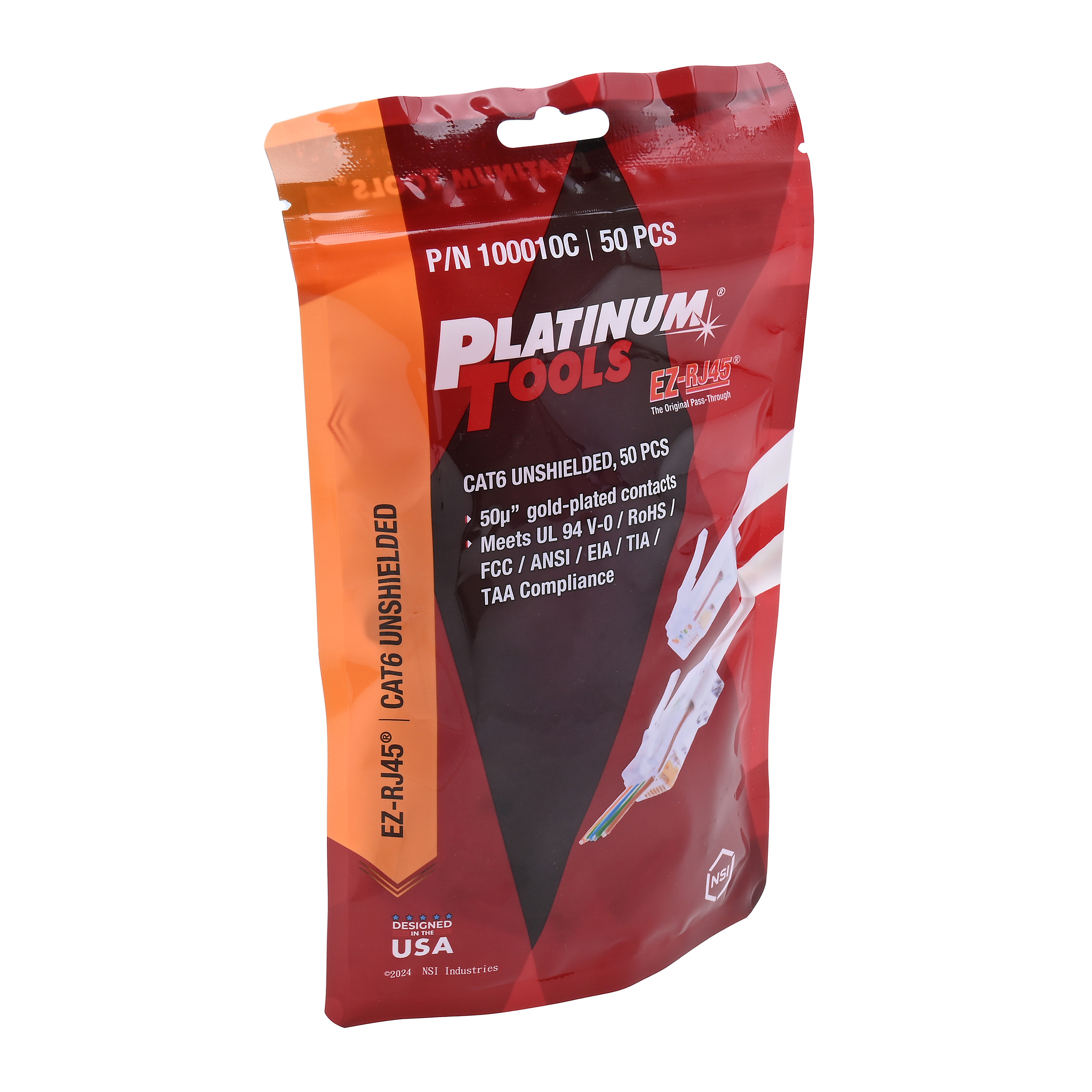
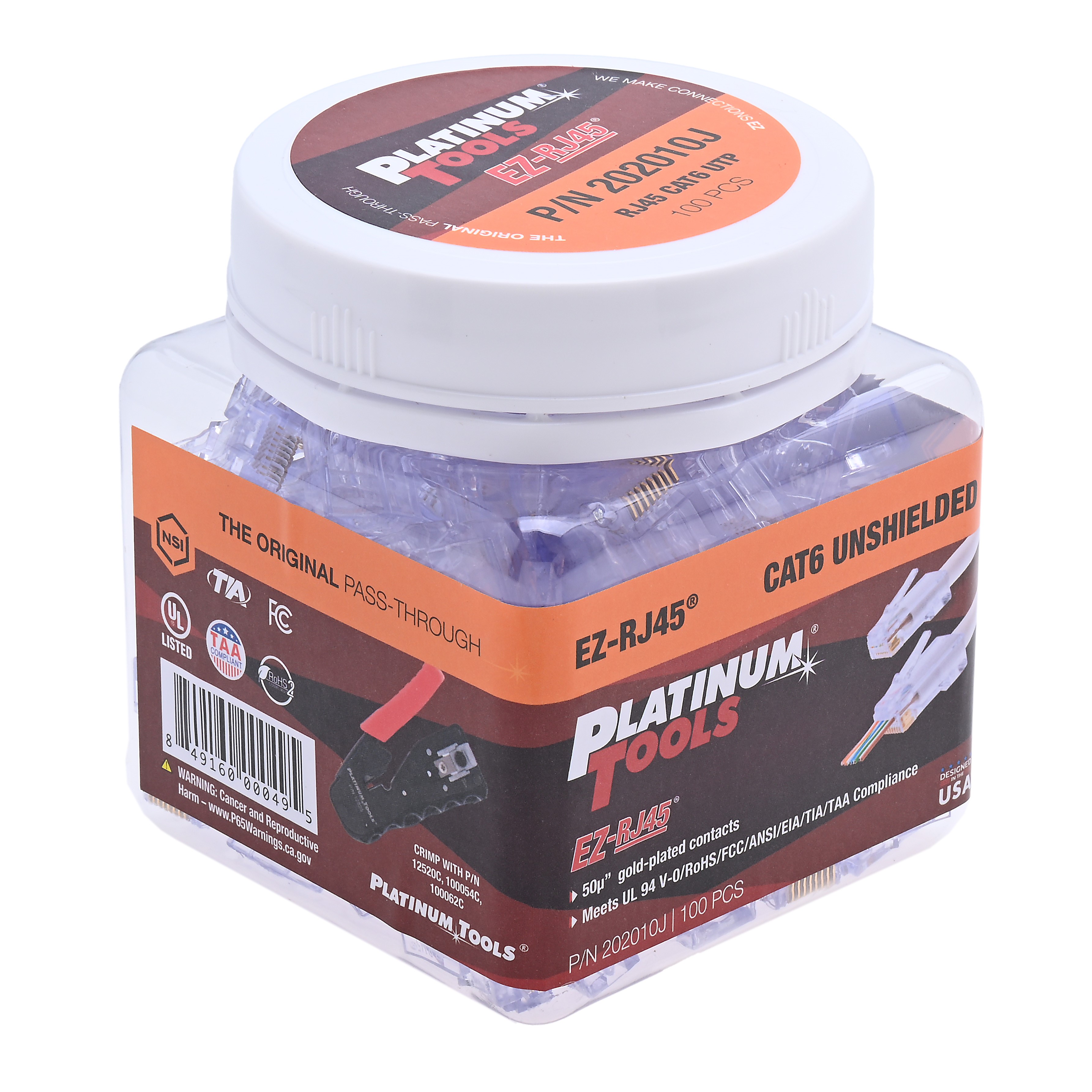
Pass-through connectors arrived in the early 2000s as Platinum Tools' EZ-RJ45 line. The pitch was simple: stop guessing whether the wire order is correct before you crimp. Slide the wires all the way through the connector, see them emerge from the front, verify the order, then crimp. The crimp cycle includes a blade that trims the protruding conductors flush with the connector face.
Two decades later, pass-through is mainstream. Most professional installers use them. But the pass-through approach has tradeoffs that are worth understanding before you commit.
How Pass-Through Connectors Work
A standard RJ45 connector has 8 short wire channels that terminate at the contact blades inside the connector body. You strip the cable, untwist the pairs, arrange the wires in T568B order, trim them to a precise length so they reach but do not exceed the contact blade position, and insert them into the connector. If the wires are too long, the connector will not seat. If they are too short, contacts will not make.
A pass-through connector has 8 wire channels that go all the way through the connector body. The wires enter from the back, pass through the entire connector, and emerge from the front. The crimp tool has two functions: a die that closes the connector body and seats the contact blades into the conductors, and a trim blade that cuts the protruding wires flush with the connector face during the same crimp stroke.
The result is that wire-order verification happens visually before you crimp. You can see all 8 conductors emerging from the front in their correct order. If any wire is out of place, you pull them back, rearrange, and reinsert. This is impossible with standard RJ45 because the wire ends are hidden inside the connector body.
The Pros
Visible wire-order verification
This is the main reason pass-through connectors exist. Wire-order errors are the most common termination mistake. With standard RJ45, you arrange the wires, trim them to length, push them into the connector, and hope they are in the right order. Pass-through eliminates the hope. You see the order before crimping and adjust if anything is wrong.
Faster terminations once you are practiced
The strip, untwist, arrange, insert, verify, crimp workflow is faster than strip, untwist, arrange, trim-to-precise-length, insert, hope-it-is-right, crimp. After 100 or so terminations, an experienced installer can complete a pass-through termination in 30-40 seconds, which is meaningfully faster than standard RJ45.
Lower training time for new installers
Teaching new technicians to terminate Cat6 with standard RJ45 connectors takes patience. Trim-to-length is a feel skill that takes practice. Pass-through reduces the skill gap because the visible verification provides immediate feedback. New installers reach acceptable termination speed faster on pass-through than on standard.
Reduced waste from bad terminations
Standard RJ45 terminations that come out wrong often require cutting off the connector and starting over, wasting both the connector and a few inches of cable. Pass-through reduces this waste because most order errors are caught before crimping.
Tighter untwist control
Because you can see the wires through the connector, you can manage the untwist length more precisely. This matters for Cat6A and other high-frequency cable categories where untwist length directly affects NEXT (Near-End Crosstalk) performance.
Family scaling
Platinum Tools' pass-through line scales from EZ-RJ45 (Cat5e/Cat6) to ezEX44 (Cat6) to ezEX48 (Cat6A) to shielded variants. The same general workflow and the same crimp tool family handles every cable type you are likely to encounter. See ezEX44 vs ezEX48 for the size selection guide.
The Cons
You need the matching crimp tool
A standard RJ45 crimp tool does not have a trim blade. If you use it on a pass-through connector, the conductors will protrude past the connector face and the termination will not pass certification or even basic visual inspection. Pass-through requires a pass-through-rated tool. The EzEX Crimp Tool and PTS PRO Universal handle the Platinum Tools family.
Tool compatibility is not universal
Even within the pass-through ecosystem, not all tools work with all connectors. The original Clamshell EZ-RJ45 crimper does not work with ezEX connectors. The EzEX Crimp Tool does not work with non-Platinum brand pass-through connectors. Tool and connector must match families.
Quality varies dramatically
Cheap pass-through imports are sold on Amazon and elsewhere for a fraction of the cost of name-brand connectors. Their quality is highly variable. Common issues include bent contact blades that pierce wrong, out-of-spec wire channel diameters, weak strain reliefs, and inconsistent crimp die compatibility. Buying cheap connectors is the fastest way to ruin the reputation of pass-through with your team.
The original TIA compliance objection
Early pass-through connectors had an objection from the standards community: the trimmed conductor end at the connector face could leave a small exposed copper segment between the IDC contact and the trim cut. Some certifiers flagged this as a TIA compliance issue. Modern pass-through designs (since 2018) place the trim cut within the IDC contact zone, eliminating the exposed copper. Current pass-through connectors from Platinum Tools and other reputable manufacturers are TIA-568 compliant.
Trim debris
Pass-through trim creates small bits of copper debris during each crimp. In sensitive environments (clean rooms, server cabinets) you may need to crimp over a tray or container to catch the debris. This is minor but worth noting.
Slightly higher per-connector cost
Pass-through connectors are typically 10-20% more expensive than equivalent standard RJ45 connectors. The labor savings usually outweigh the per-connector premium, but on very large cable plant builds, the materials cost difference can add up.
Pass-Through vs Standard RJ45: Direct Comparison
Here is the direct comparison across the metrics that matter on the job.
| Factor | Pass-Through RJ45 | Standard RJ45 |
|---|---|---|
| Wire-Order Verification | Visual, before crimp | Indirect, after crimp |
| Termination Speed | Faster after practice | Slower (trim-to-length) |
| Trim-to-Length Required | No | Yes (precise) |
| Required Tool | Pass-through crimper | Any standard RJ45 crimper |
| Connector Cost | 10-20% premium | Baseline |
| TIA-568 Compliant | Yes (current designs) | Yes |
| Training Time | Lower | Higher |
| Crimp Waste | Trim debris | Failed crimps |
| Brand Quality Risk | High (cheap imports vary) | Moderate |
Both approaches are TIA compliant when used with quality components. Pass-through has efficiency advantages, standard has lower upfront cost and tool flexibility.
Where Pass-Through Connectors Actually Fail
Failures with pass-through connectors fall into a small number of well-understood categories. Knowing them helps you avoid them.
Using a non-pass-through tool
The number one failure mode. An installer grabs a standard RJ45 crimper, crimps a pass-through connector, and ends up with a termination where the conductors stick out half an inch past the front face. The contacts inside might be made correctly, but the connector is unusable, will not seat in jacks, and looks unprofessional. Always verify the tool is pass-through capable before crimping.
Using the wrong family of pass-through tool
The Clamshell EZ-RJ45 Crimp Tool and the EzEX Crimp Tool are both pass-through tools, but their die geometries differ. Using a Clamshell tool on an ezEX connector will deform the connector body. Using an EzEX tool on the older EZ-RJ45 still works but is not officially supported across all sizes. Match family to family. See EXO Crimp Frame vs EZ-RJ PRO HD for the high-end tool comparison.
Cheap unbranded connectors
Cheap pass-through connectors often have inconsistent wire channel sizing, bent contact blades that pierce wrong, weak strain reliefs that pull out under tension, or out-of-spec body dimensions that do not seat in standard jacks. The resulting terminations may pass a basic continuity check but fail certification testing. Stay with reputable brands.
Wrong size connector for the cable
Using ezEX44 on Cat6A cable, or using EZ-RJ45 (Cat5e/Cat6 sized) on Cat6A cable, leads to conductors that jam halfway through and refuse to pass through the front. The connector and cable have to be matched by conductor diameter.
Excessive untwist
Pass-through makes wire arrangement easier, but it does not eliminate the requirement to keep untwist length minimal at the termination. Letting the pairs untwist back two inches before insertion will pass a wire map test but fail NEXT certification on Cat6 and Cat6A. Maintain twist as close to the connector as possible.
The TIA Compliance History
For a few years, the standards community had a real concern with pass-through. The trim cut on early pass-through designs left a small exposed copper section between the IDC contact and the cut face. In a strict reading of TIA-568, this exposed copper was a non-conformance because conductor surfaces between the cable jacket and the IDC blade should be insulated.
Two things resolved the issue:
- TIA-568.2-D clarification. The 2018 update to the connecting hardware standards explicitly addressed the pass-through topology and provided test procedures that account for the trim cut location. Pass-through connectors that meet the test pass the standard.
- Connector design improvements. Modern pass-through connectors from Platinum Tools and similar manufacturers have moved the trim cut location inside the IDC contact zone, so the cut occurs where the IDC blade has already pierced the insulation. There is no exposed copper between cut and contact.
The result is that current pass-through connectors are TIA-568 compliant and pass certification testing. The historical objection is no longer applicable to current product designs. Specifying pass-through on a job where TIA compliance is required is no longer a problem. For a deeper comparison, see Pass-Through vs Standard RJ45.
When to Use Pass-Through
Pass-Through Is the Right Choice For
- High-volume cabling jobs: The speed advantage compounds across hundreds of terminations
- New installer training: Visual verification reduces the learning curve
- Cat6A and Cat6: Tight untwist control is easier with visible wires
- Field termination of patch cables: No precision trim required mid-job
- Difficult cable types: Solid Cat6A is easier to handle pass-through than standard
Standard RJ45 May Still Be Better For
- Single-cable jobs: Investment in the pass-through tool may not pay off for one cable
- Existing standard tooling: If your team is already equipped with standard tools, the switchover cost matters
- Specific specifications: Some legacy contract specs prohibit pass-through
- Budget-constrained projects: Per-connector cost matters at large scale
- Specialty connectors: Some industrial-grade or specialty RJ45 variants are not available in pass-through
Quality Differentiators
If you are buying pass-through connectors, here is how to separate good from bad without testing 1000 of them.
- Brand reputation. Platinum Tools is the original and remains the standard. Other reputable brands include Klein, Ideal, and Panduit. Avoid unbranded Amazon listings.
- Specified compliance. The product page should explicitly state TIA-568.2-D compliance. If it does not, treat the connector as suspect.
- Cable rating. The connector should be rated for a specific cable category (Cat5e, Cat6, Cat6A) and conductor diameter range. Generic "RJ45 pass-through" with no category is a warning sign.
- Tool compatibility. The product page should list which crimp tools the connector works with. If this information is missing, the connector probably has not been validated against any specific tool.
- Country of manufacture and quality control. Reputable brands publish where their connectors are made and what their quality control practices are. Anonymous suppliers do not.
Related Reading
- Pass-Through vs Standard RJ45 Direct head-to-head comparison.
- EZ-RJ45 vs ezEX Connectors Within the pass-through family, which one fits.
- ezEX44 vs ezEX48 Sizing guide for the ezEX line.
- RJ45 Connector Types Explained Full taxonomy.
Recommended Products
Pass-Through RJ45 Connectors
Quality pass-through connectors across the cable category range
EZ-RJ45 for Cat5e/Cat6 standard. ezEX44 for tight Cat6 fit. ezEX48 for Cat6A. ezEX-RJ45 Universal as the catch-all.
Pass-Through Compatible Crimp Tools
Tools with the trim blade required for pass-through terminations
EzEX is the dedicated tool for the modern family. PTS PRO is the universal choice. Clamshell is for legacy EZ-RJ45 only.
Termination Kits
All-in-one kits for pass-through workflow
Kits bundle the crimper, stripper, and starter pack of connectors. Best entry point for new pass-through users.
Frequently Asked Questions
Are pass-through RJ45 connectors reliable?
Quality pass-through RJ45 connectors from established manufacturers like Platinum Tools are as reliable as standard RJ45 connectors when used with the correct crimp tool. They have been TIA-compliant since 2018 when the standard was clarified. Unbranded or low-cost imports often have inconsistent contact geometry and can fail certification testing.
Are pass-through connectors TIA compliant?
Yes, current pass-through RJ45 connectors are compliant with TIA-568 standards. The earlier objection about exposed copper at the trim cut was addressed in modern designs where the cut is made flush with the connector body and within the IDC contact area.
What is the main advantage of pass-through RJ45 connectors?
The main advantage is wire-order verification. Because the conductors emerge from the front of the connector before crimping, you can visually confirm all 8 wires are in T568B (or T568A) order before committing to the crimp. This eliminates the most common termination error: wrong wire order discovered only after crimping.
Why do pass-through connectors fail?
Pass-through connectors typically fail for three reasons: using a non-pass-through crimp tool that does not trim the conductors, using the wrong tool for the connector family (an EZ-RJ45 tool on an ezEX connector or vice versa), or using cheap unbranded connectors with bent contact blades or out-of-spec wire channels. Use the EzEX Crimp Tool with quality connectors to avoid these issues.
Do pass-through connectors work with stranded cable?
Yes. Pass-through RJ45 connectors work with both solid and stranded cable. Some connector models are optimized for one or the other based on contact blade geometry, but most modern pass-through connectors handle both. Always check the product specs to confirm the connector is rated for your conductor type.
Get the Pass-Through System That Works
Quality pass-through connectors paired with the right crimp tool eliminate the most common termination errors and speed up your work. The investment pays back across hundreds of terminations.