- Tool-less plugs earn their keep in break-fix kits — service calls, emergency repairs, and one-off runs where carrying a crimper is impractical.
- They cost 5–10x more per connector: $1.50–$3.00 each vs $0.20–$0.50 for a pass-through plug. On a 20+ drop job, the crimper pays for itself.
- They are not actually faster. Cap loading and seating takes 60–90 seconds vs 45–75 seconds for a practiced pass-through crimp.
- Most tool-less plugs are one-shot. Mis-pair the conductors and the plug goes in the trash — you cannot reterminate.
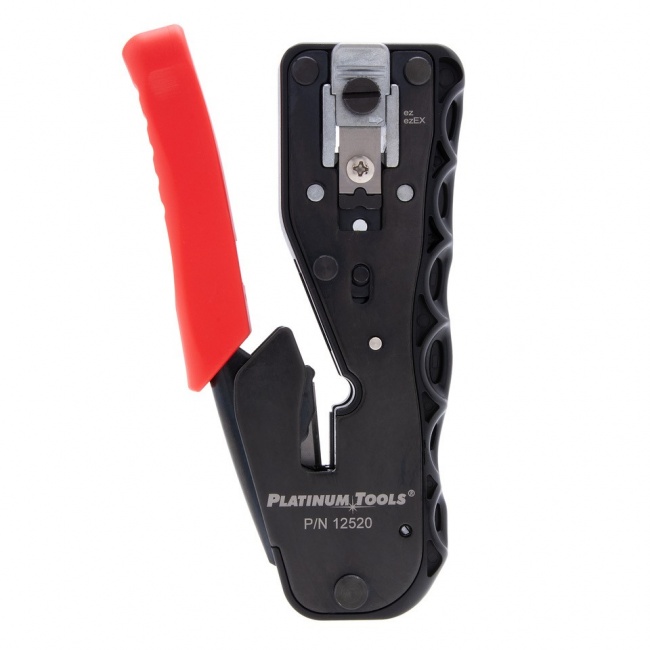
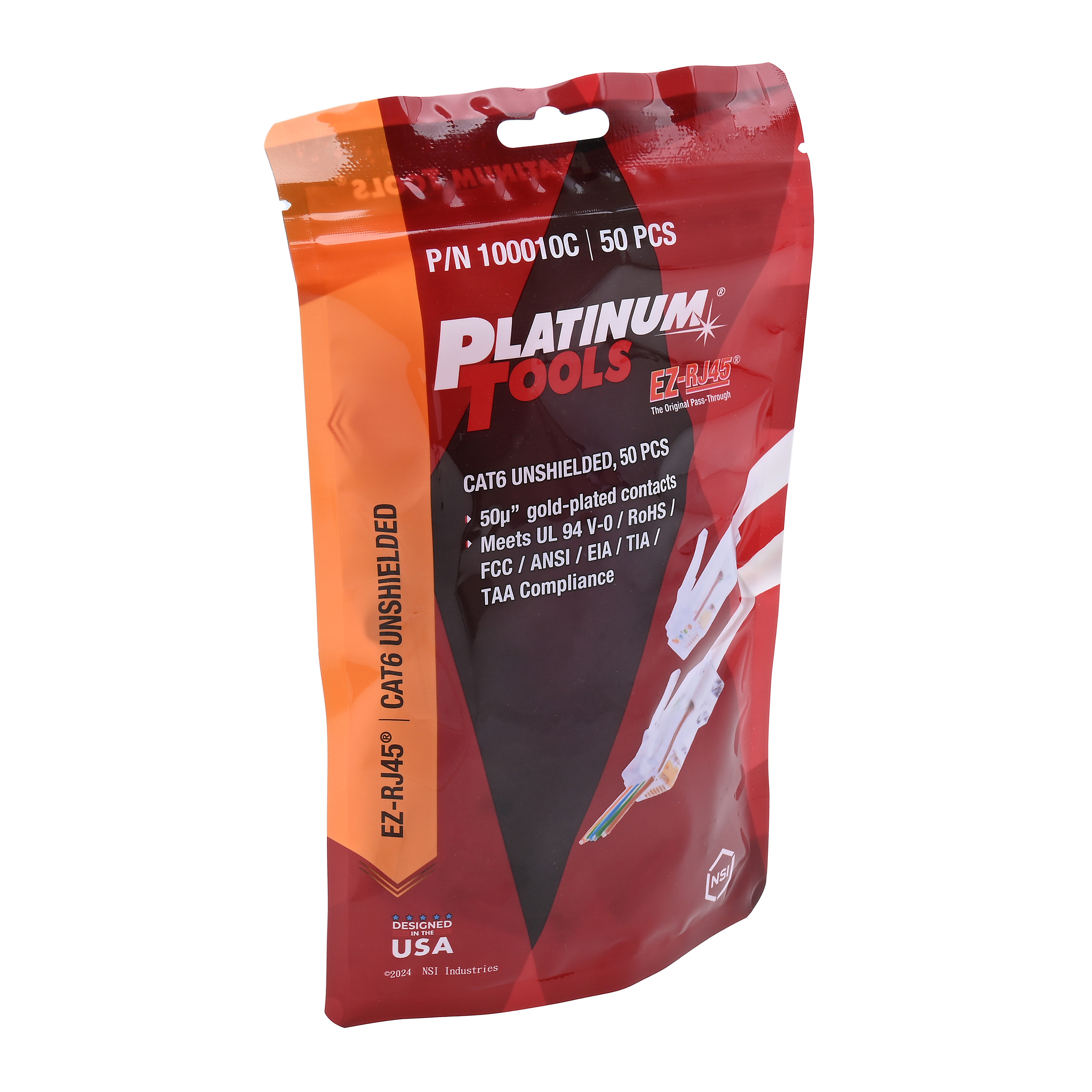
- For volume work, patch cords, and certified Cat6A links, a crimped ezEX48 seated with the EzEX Crimp Tool is the proven default.
The Quick Answer
Tool-less RJ45 connectors have grown from a niche specialty product into a regular shelf item at distributors. The pitch is simple: skip the crimper, push the cap, the plug is done. For an installer who has spent ten years grinding through patch cord production with a standard frame crimper, that pitch sounds great. The reality is more nuanced. Tool-less plugs solve a real problem, but they introduce trade-offs that matter in the field.
Deciding what to standardize on? Nine out of ten pro installs land on a pass-through system for cost and Cat6A certification, and keep a few tool-less plugs in the truck for break-fix. Skip the trial-and-error and start with a matched crimper, load bars, and connectors in one box.
Shop the EzEX Termination Kit →Not ready to buy? Read the RJ45 crimp tool buyer's guide first.
How Tool-Less RJ45 Plugs Actually Work
Tool-less plugs use insulation displacement contact (IDC) technology, the same termination method that wall jacks and patch panels have used for decades. Inside the plug body, eight blade contacts wait in a precise position. The installer loads the cable conductors into a slotted cap or carrier in the correct T568A or T568B order, then closes the cap. The closing motion drives each conductor onto its corresponding blade, slicing through the insulation and making the connection.
The general termination sequence
- Strip the cable jacket to the manufacturer's specified length, typically 25 to 35 mm.
- Untwist each pair only as far as necessary to load the conductors into the loading bar or cap.
- Trim the conductors flush with the front of the cap.
- Slide the loaded cap into the plug body until it clicks or fully seats.
- Close the cap or activate the lever, depending on the specific design.
That is it. No 8P8C crimper, no die selection, no trimming the conductor ends after the crimp. The result is a finished plug that should be ready to test.
Why some installers love them
- No crimper to carry. A coat pocket holds a handful of plugs and a strip tool. That is the whole kit.
- Predictable conductor loading. The cap is keyed for T568A or T568B in many models, which removes one common failure point.
- Good for first-time terminators. The mechanical action of closing the cap is easier to teach than the timing and pressure of a crimper stroke.
The RJ45 Termination Method Decision Card
Stop guessing which connector belongs on which job. A printable, one-page cheat sheet that tells you — at a glance — when tool-less wins and when to reach for the crimper. Laminate it, drop it in the tool bag, spec the right plug every time.
- Tool-less vs pass-through vs standard, side by side
- Cost-per-drop & Cat6A certification quick-reference
- “Reach for tool-less when…” field decision rules
No spam. Unsubscribe anytime.
Where Tool-Less Plugs Fall Short
The reasons tool-less plugs have not displaced crimped 8P8C connectors come down to four practical issues: cost, size, durability, and consistency at the upper end of cable categories.
Cost per connector
A bag of 100 standard EZ-RJ45 Cat6 plugs runs roughly the price of 25 to 40 tool-less plugs depending on the brand. For a single repair that price difference is irrelevant. For a contractor running 200 drops in a building, the unit cost difference is hundreds of dollars per project.
Physical size
Tool-less plugs are taller and longer than standard 8P8C plugs because they need internal space for the IDC contact mechanism and cap. That extra size is fine for wall jacks and switch ports, but it can interfere with high-density patch panels, cable management arms, and tightly bundled patch cord runs.
Durability under flex
The IDC contacts in a tool-less plug rely on the cap holding the conductors firmly in place. If the cable is yanked at the boot, twisted aggressively, or flexed thousands of times, the conductors can shift slightly and degrade the connection. A properly crimped ezEX-RJ45 connector clamps the cable jacket and conductors together as a single unit, which holds up better in patch panel jumpers, mobile equipment cables, and outdoor applications.
Cat6A consistency
Cat6A's tighter return loss and alien crosstalk requirements demand precise conductor positioning at the contact points. Some tool-less designs hit Cat6A component performance, but the margin is thinner than with a well-crimped ezEX48 Cat6A connector seated in a cable-rated load bar. For 10 Gigabit channel certification, most contractors stick with proven crimped systems.
Tool-Less vs Pass-Through vs Standard Crimp
Here is how the three common termination methods stack up across the criteria that drive purchasing decisions.
| Criterion | Tool-Less | Pass-Through | Standard 8P8C |
|---|---|---|---|
| Crimp tool required | No | Yes | Yes |
| Cost per plug (typical) | $1.50–$3.00 | $0.20–$0.50 | $0.10–$0.30 |
| Termination time (skilled) | 60–90 sec | 45–75 sec | 60–120 sec |
| Cat5e support | Yes | Yes | Yes |
| Cat6 support | Yes | Yes | Yes |
| Cat6A support | Limited models | Yes (ezEX48) | Yes |
| Reusable on mistakes | No | No | No |
| Patch cord production | Cost prohibitive | Excellent | Good |
| Field repair kit size | Smallest | Compact | Compact |
| Certification report | Brand-dependent | Yes | Yes |
Cost ranges reflect 100-pack pricing from major distributors as of early 2026. Tool-less plugs from premium brands such as Panduit and Leviton can run higher than the upper range.
When Tool-Less Plugs Are the Right Call
There are situations where the tool-less approach genuinely outperforms a crimped solution.
- Service calls without a truck. A consultant or break-fix tech showing up to a customer site for a single drop does not need to lug a crimper. A handful of tool-less plugs and a stripper handle the job.
- Emergency repairs. A factory line is down because a forklift crushed a control cable. The plant electrician needs to be back on the line in five minutes. Tool-less terminations beat hunting for the right crimp die.
- Helpdesk and IT staff. An IT technician who terminates four cables a year does not need to maintain a crimper or remember its die settings. Tool-less plugs reduce the skill floor.
- One-off custom-length runs. When a custom-length cable is needed once and only once, the per-connector cost is a non-issue.
- Training environments. Tool-less terminations are easier to teach to apprentices in classroom settings before they move to crimped workflows on real jobs.
When Crimped Connectors Are the Right Call
For most professional installation work, a crimped connector remains the correct default. The cost, durability, and consistency advantages compound across a real workload.
- Volume installations. Twenty drops or more on a single project. The connector cost difference alone justifies a crimper investment.
- Patch cord production. Producing custom-length patch cords in any quantity is impractical with tool-less plugs.
- Certified Cat6A links. If the job requires a certification report and the channel is Cat6A or above, a crimped ezEX48 Cat6A connector seated with the EzEX Crimp Tool is the proven path.
- Repeated flex environments. Patch panel jumpers, mobile cart cables, AV cart cables, and any cable that gets unplugged and replugged regularly.
- Outdoor and harsh environments. Tool-less plugs are not generally rated for outdoor exposure or vibration. Crimped connectors with proper strain reliefs hold up.
The Hidden Costs of Each Workflow
Tool-less hidden costs
- Cap-seating mistakes that ruin a plug and require restarting.
- Larger plug bodies that fail to seat properly in some recessed wall jacks and faceplates.
- Boot compatibility limitations. Many tool-less plugs use proprietary boots or no boots at all.
- Inventory complexity if the team uses tool-less for some jobs and crimped for others.
Crimp hidden costs
- Crimper maintenance and die wear. A worn die produces under-crimped contacts that pass continuity testing but fail a Fluke certification.
- Calibration time. Quality crimpers benefit from periodic calibration verification.
- Skill development. New installers waste connectors learning the right pressure and timing.
- Tool theft and loss. A premium pass-through crimper costs more than 200 tool-less plugs.
Recommended Workflows by Installer Type
Here are the specific tool and connector combinations we recommend for each common scenario.
High-volume installer (default)
Pass-through workflow. Lowest per-plug cost, fastest skilled-operator times, full Cat5e through Cat6A support, durable crimps.
For Cat5e or mixed Cat5e and Cat6 jobs, the ezEX44 plug is the budget alternative to Cat6-rated plugs.
Service tech / break-fix kit
Compact kit with a mix of tool-less plugs for emergency drops and a small pass-through crimper for planned terminations. Cover both bases.
A pocket-sized tester is non-negotiable for service work. Verify every termination before you leave the site.
Cat6A certified install
Crimped pass-through with the matched die set. The ezEX48 connector and EzEX crimper are the proven combination for 10 Gigabit channel certification.
Pair the connectors with proper strain reliefs and verify the finished link with a wire map tester before you close the wall.
Common Mistakes With Each Method
Tool-less mistakes to avoid
- Loading conductors with too much untwist. Even though tool-less plugs do not have a load bar, the pair untwist still drives crosstalk. Keep untwisted length under 13 mm.
- Closing the cap on a partially seated conductor. If a conductor backs out before the cap closes, the IDC contact will not pierce all the way. Visually verify all eight conductors are flush before closing.
- Forcing the cap on a too-thick cable. Larger Cat6 and Cat6A cable jackets exceed the diameter rating of some tool-less plugs. Check the datasheet.
Crimp mistakes to avoid
- Under-crimping. An incomplete crimper stroke leaves the plug body taller than spec. The contacts may pass continuity but fail certification.
- Skipping the load bar on Cat6A. Cat6A pairs are too thick to align reliably without a load bar. The ezEX48 system uses an internal load bar that solves this automatically.
- Mixing dies. A pass-through die crushed onto a non-pass-through plug will mangle the connector.
For a deeper dive into termination failures across both methods, see our guide on RJ45 termination mistakes that fail certification.
Related Reading
Frequently Asked Questions
What is a tool-less RJ45 connector?
A tool-less RJ45 connector is a field-terminable plug that uses an internal cap or housing to push the eight conductors onto insulation displacement contacts when the housing is closed by hand or with a small lever. It does not require an 8P8C crimp tool. The trade-off is higher per-connector cost, larger physical size, and lower durability under repeated flex compared to standard crimped plugs.
Are tool-less RJ45 connectors as reliable as crimped ones?
For static installations with limited movement, well-made tool-less plugs perform reliably. For patch cords, repeated reterminations, high-vibration environments, or critical 10G runs, properly crimped pass-through or standard 8P8C plugs remain the more durable and consistent option. The connection in a tool-less plug depends on a captive cap that can loosen if the cable is yanked or repeatedly flexed at the boot.
Do tool-less RJ45 connectors meet TIA-568 channel performance?
Some tool-less plugs are tested to TIA-568 component performance for Cat5e and Cat6, and a few advanced models are tested at Cat6A. The link or channel performance depends on the entire termination chain. Most certification testers will sign off on a tool-less terminated link if installed correctly. Verify the manufacturer datasheet for the specific category rating before specifying tool-less plugs on a job that requires a certification report.
Can I reterminate a tool-less RJ45 connector?
Most tool-less connectors are not reusable once the cap is closed. The IDC contacts are designed for a single piercing event. If you mis-pair or need to redo the termination, cut the plug off and use a fresh connector. Some higher-end designs allow limited reuse, but planning for a one-shot termination is the safe assumption.
Is tool-less faster than pass-through RJ45?
Not really. A skilled installer with a pass-through workflow and a quality crimper such as the EzEX Crimp Tool can terminate an RJ45 in 45 to 75 seconds. Tool-less plugs save the crimping step but add cap-seating and pair-loading steps that take similar total time. The actual speed advantage depends on operator familiarity, not the connector style.
Related Guides
- Pass-Through vs Standard RJ45 Connectors — the two crimped workflows compared head to head
- EZ-RJ45 vs ezEX Connectors — which pass-through connector family fits your cable
- RJ45 Crimp Tool Buyer's Guide — find the right crimper before you standardize
- How to Crimp an RJ45 Connector — step-by-step pass-through termination
- Common RJ45 Termination Mistakes — the errors that fail certification, in both workflows
- Keystone Jack vs RJ45 Plug — when a jack-and-patch-cord beats a field-terminated plug
- How to Replace an RJ45 on Existing Cable — the repair scenario where tool-less shines
Ready to Terminate With Confidence?
Pass-through crimped connectors are the workhorse of professional low-voltage installs. Tool-less plugs have their place in service kits and emergency repairs. Stock both, standardize your workflow, and stop failing certification on avoidable connector mistakes.
“Switched our crew to the EzEX pass-through system after years of tool-less plugs on patch runs. First-pass certification went from a headache to a non-issue — and our connector spend dropped by more than half.” — Structured cabling contractor, 200+ drop commercial fit-out