The Short Version
Stripping a cable jacket sounds simple. It is not. The difference between a clean strip and a damaged conductor is fractions of a millimeter, and that difference is what determines whether your installation passes a Cat6A certification or fails NEXT. This guide is about choosing the stripper that does not undermine the rest of your work.
What Makes a Good Cat6A Stripper
Cat6A cable is heavier, thicker, and frequently shielded. The stripper has to handle that without overcorrecting and damaging what is underneath the jacket.
Adjustable Blade Depth
This is non-negotiable for Cat6A. Cable jackets vary in thickness across manufacturers, even within the same category. A fixed-depth stripper that works on one Cat6A cable will nick conductors on a different one. Adjustable depth lets you dial in the cut for the specific cable you are using.
Round-Cable Geometry
The blade should rotate around the cable in a clean circular motion, scoring the jacket evenly on all sides. Strippers that pinch and pull tend to score deeper on one side, leaving an uneven strip that does not break cleanly.
Shield Compatibility
For F/UTP and S/FTP cables, the stripper has to score the outer jacket without cutting through the foil or braid shield. A good Cat6A stripper has enough depth precision to leave the shield intact for proper grounding when you terminate.
Spline-Friendly Design
Many Cat6A cables include a center spline (the plus-sign-shaped plastic separator between pairs). The stripper should not snag, twist, or distort the spline as it cuts. Strippers with a guided cable channel handle this better than free-pull designs.
Replaceable Blades
Blades dull. A tool with replaceable blades is one you keep for a decade. A tool with sealed blades is one you throw away after the first set wears out.
Top Picks for Cat6A and Shielded Cable
1. Multi-Strip Cable Stripper — Best Overall
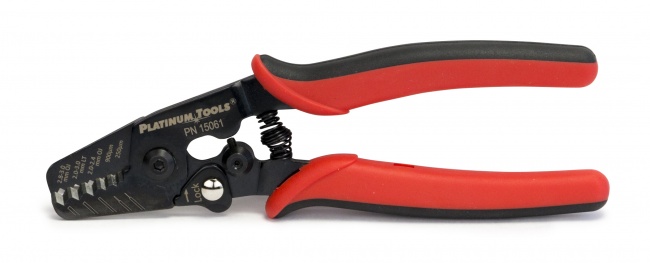
The Multi-Strip Cable Stripper is the go-to for Cat6A, shielded, and mixed cable environments. Adjustable blade depth handles thick jackets, the round-cable channel keeps cuts even, and the build quality holds up to daily use. It also handles Cat5e and Cat6 without recalibrating beyond a single dial turn.
What we like: dial-in blade depth, replaceable blades, equally good on shielded and unshielded. What it does not do: heavy-duty coax (use a SealSmart for that).
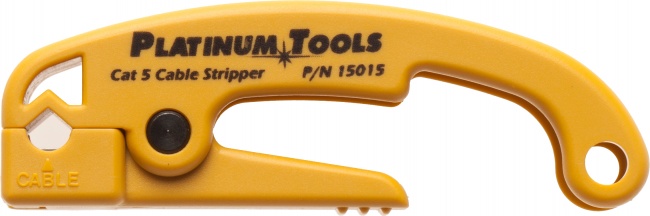
2. Cat5/6 Jacket Stripper — Best for Volume on Lighter Cable
If your work is exclusively Cat5e and Cat6, the Cat5/6 Jacket Stripper is faster than a fully adjustable tool. The blade is calibrated for typical Cat5e/Cat6 jacket thickness, so you skip the calibration step and just strip. For high-volume residential or office Cat6 pulls where you do not see Cat6A or shielded, this saves time per termination.
3. SealSmart Coax Stripper — Best for Coax
For coaxial work, the SealSmart Coax Stripper performs a precise two-step strip (jacket plus dielectric) in one motion, giving you connector-ready coax with consistent strip lengths. If you do MoCA, security camera coax, or HFC work alongside data cabling, this is the second stripper you keep on the truck.
Stripper Comparison
| Stripper | Price Range | Best For | Pros | Cons |
|---|---|---|---|---|
| Multi-Strip Cable Stripper | $$ | Cat6A, shielded, mixed work | Adjustable depth, replaceable blades, shield-safe | Slower than fixed-depth on uniform jobs |
| Cat5/6 Jacket Stripper | $ | Cat5e/Cat6 volume work | Fast, calibrated for typical UTP | Not recommended for Cat6A or shielded |
| SealSmart Coax Stripper | $$ | Coaxial cable | Precise two-step strip in one motion | Coax only — not for twisted pair |
| Generic utility knife | $ | Emergencies only | Cheap, available everywhere | Inconsistent depth, conductor damage common |
| All-in-one combo tool | $ | Light DIY work | Multi-function | None of the functions are great; not for Cat6A |
Common Mistakes Stripping Cat6A
Using a Cat5e Stripper on Cat6A
Cat6A jackets are typically 30-50% thicker than Cat5e. A stripper sized for Cat5e either fails to cut through cleanly (you end up gouging) or, if you push harder, cuts too deep into the conductors. The fix is a stripper with adjustable depth, calibrated to your cable. See our Cat6A termination guide for the full procedure.
Stripping Too Long a Section
Removing more jacket than necessary exposes more cable to bend stress and untwists more pair length than the standard allows. For Cat6A, you have a maximum of 0.5 inch of untwist per pair. Stripping a 3-inch section forces excess untwist and degrades NEXT performance.
Ignoring the Shield
On shielded cable, the foil or braid is part of the cable's electrical performance. Slicing through it with the stripper kills the shielding effectiveness. Set your blade depth to score only the outer jacket and leave the shield intact, then trim the shield separately according to the connector's requirements.
Pulling Instead of Rotating
The blade should rotate around the cable to score the full circumference, then the jacket should slide off cleanly. Pulling laterally instead of rotating creates an uneven cut that often does not separate cleanly, forcing you to flex the jacket and risk conductor damage.
Match the Stripper to the Cable
Pure Cat5e/Cat6 Pulls
Residential, small office, IT closet work. No shielded, no Cat6A.
Pick the Cat5/6 Jacket Stripper. Faster on uniform UTP without sacrificing quality.
Cat6A Commercial Installs
10-gig backbones, healthcare, data center MDF/IDF feeds. Mix of UTP and shielded constructions.
Pick the Multi-Strip Cable Stripper. Adjustable depth handles every Cat6A you will encounter.
Shielded Industrial / Outdoor
F/UTP and S/FTP runs in factories, EMI-heavy environments, or outdoor conduit.
Pick the Multi-Strip Cable Stripper. Shield-safe depth precision is critical here.
Mixed Voice/Data/Coax
Telecom-style jobs with Cat6 data, coax cameras, and the occasional Cat6A run.
Carry both the Multi-Strip and SealSmart Coax. The combination covers everything.
Related Reading
Frequently Asked Questions
Why does Cat6A need a different stripper than Cat6?
Cat6A jackets are thicker, the conductors are larger gauge, and many Cat6A cables have a foil shield, a center spline, or both. A stripper sized for Cat6 will either fail to cut through the heavier jacket or, more dangerously, cut too deep and nick the conductor insulation. The Multi-Strip has adjustable depth and blade geometry designed for the heavier construction.
Can I use a utility knife to strip Cat6A cable?
You can, but you should not. A utility knife produces inconsistent cut depth, frequently nicks conductor insulation, and is the leading cause of failed Cat6A terminations. Conductor insulation damage from a knife is the kind of fault that passes a wiremap test and fails a NEXT measurement, which means you will not catch it until you certify the run.
Do I need a different stripper for shielded vs unshielded cable?
Shielded cable benefits from a stripper that lets you score the jacket without damaging the underlying foil or braid. The Multi-Strip is well-suited because its adjustable depth lets you cut shallow enough to preserve the shield. A general-purpose UTP stripper will often slice the foil, forcing you to recut and rework the termination.
How do I know if a stripper is cutting too deep?
Inspect every conductor after stripping. Any nick, scrape, or visible color change on the conductor insulation means the blade is set too deep. A well-set stripper produces a clean ring around the jacket with the conductor insulation completely intact. If your terminations pass wiremap on a basic tester but fail certification, the stripper is the first place to look.
Which stripper is best for shielded coax cable?
For coax, a dedicated coaxial cable stripper like the SealSmart Coax Stripper is the right tool. It produces a precise two-step strip (jacket and dielectric) in one motion and is designed around standard coax dimensions. A general twisted-pair stripper will not give you the consistent strip lengths coax connectors require.
Get the Right Stripper
Browse every cable stripper we carry and match the tool to the cable you actually pull.